Dealing with a cranky and irritable toddler? It may not always be random outbursts. One of the most common causes for irritability in little ones is a tooth eruption.
Children can experience teething as early as six months old.
They often feel pain and irritation when a tooth starts growing, which is why it’s so important that parents know how to soothe their baby\’s sore gums, ease their pain, and the steps they need to take now that their baby is growing their first set of teeth!
This week, our family dentist in Armadale shares some common signs your baby is about to start teething, how you can care for baby’s teeth, and when they should start visiting the dentist.
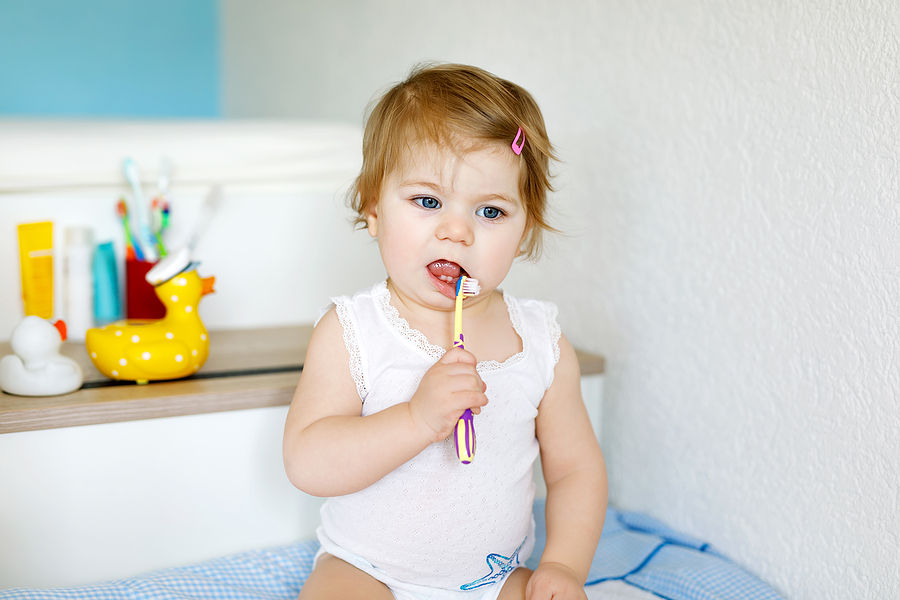 Little baby girl holding toothbrush and brushing first teeth. Toddler learning to clean milk tooth.
Common symptoms that a child is teething
Parents may not be fully aware when teething is taking place, as the pain and discomfort can often begin before the tooth becomes visible. We understand that it can be distressing to see your baby in pain, but it’s important to keep things in perspective and remember that this is a normal part of child development. Here are some of the signs of teething that you should watch out for, especially if your baby is close to six months old.Irritability and discomfort
Pain will often make your child irritated or upset. This is often caused by tender gums where the new tooth erupts. If you’ve got an irritable baby on your hands, teething is a common cause.Fever
Fever is commonly believed to be a symptom of teething, however many experts believe that teething may indeed cause a slight rise in temperature, but not enough to cause a fever. If your baby has a fever, we suggest calling your doctor.Chewing on any object
If your child starts chewing and biting every object that they can get their hands on, it may be because they are looking for comfort to ease the irritation that they are feeling. A teething ring is a fantastic tool to help babies ease their pain during this period.Tender and sore gums
A sore erupting tooth usually causes your child\’s gums to become tender and sore. To soothe their pain, you can gently rub their gums or apply ice to numb them. Other signs can include flushed cheeks, trouble feeding, and more dirty nappies.When do children\’s permanent teeth come in?
On average, a child’s teeth will start erupting around six months, with the full set of teeth expected by the age of three. For the next few years, until their baby teeth start falling out (around age six), this set of teeth acts as a sort of placeholder for their permanent set. Little baby girl holding toothbrush and brushing first teeth. Toddler learning to clean milk tooth.